USDT Check Guide: Verify Tether Before Transfer & Avoid Freezing Risk
A comprehensive guide to checking USDT for purity: how to identify risky transactions, which services to use, and how to avoid having your funds frozen.
USDT Purity Check: Why It Matters and How It Works
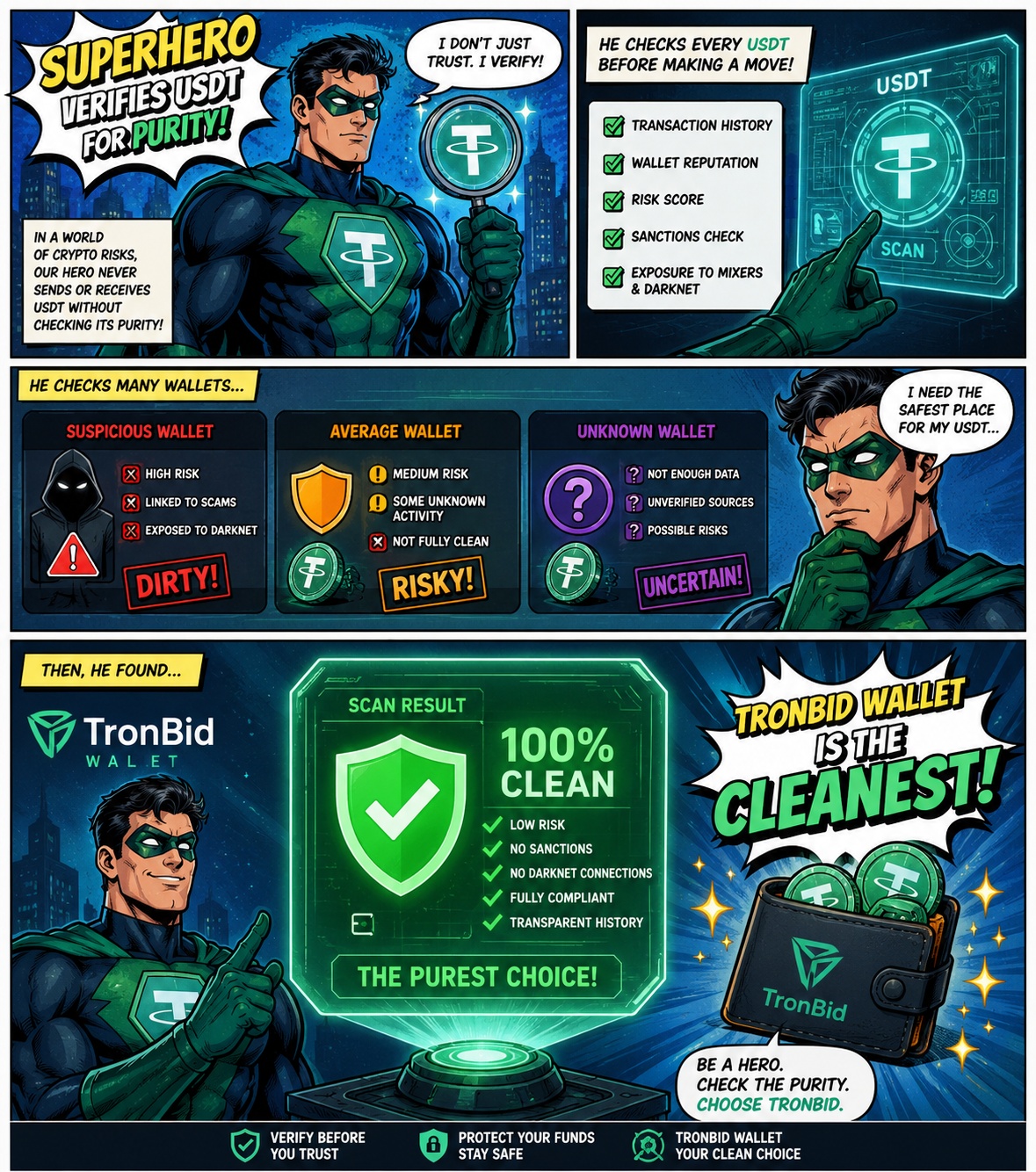
As cryptocurrencies continue to gain popularity, more users are encountering the concept of “tainted” or “dirty” assets. This is especially relevant for USDT (Tether), one of the most widely used stablecoins. A USDT purity check helps determine whether a token is linked to незаконной деятельности and whether it may be frozen.
Such checks are becoming essential not only for companies but also for individual users dealing with large amounts.
What “Dirty” USDT Means
“Dirty” USDT refers to tokens that have previously been involved in suspicious or illegal activities, such as:
fraud darknet transactions exchange hacks sanctioned transfers money laundering
Even if you received such funds unintentionally, they may still be flagged by AML (Anti-Money Laundering) systems.
Why It’s Important to Check USDT Before Receiving
Ignoring a USDT check can lead to serious consequences:
funds being blocked on an exchange account freezing denial of service financial losses
Some centralized platforms automatically screen incoming transactions and may reject suspicious assets.
How USDT Purity Checks Work
A USDT purity check is based on blockchain data analysis.
Key parameters include:
transaction history connections to suspicious addresses risk score presence on sanctions lists interactions with mixers and darknet services Methods to Check USDT 1. AML Services
There are specialized platforms that analyze crypto assets:
AMLBot Crystal Blockchain Chainalysis TRM Labs
They provide detailed reports with risk assessments and transaction history.
2. Blockchain Explorers
You can manually check an address using:
TronScan (for TRC20) Etherscan (for ERC20)
This method is less precise but useful for basic activity insights.
3. Crypto Exchanges
Some exchanges perform automatic AML checks on deposits. If USDT is flagged, the transaction may be blocked.
How to Reduce Risks When Using USDT
To stay safe:
always verify addresses before receiving funds avoid transfers from unknown senders use trusted verification services avoid unchecked P2P deals keep AML reports for large transactions USDT Checks on the TRC20 Network
TRC20 is one of the most popular networks for USDT due to its low fees. However, because of its widespread use, it also sees more high-risk transactions.
Key factors:
high transaction volume large number of P2P deals frequent use in gray-area schemes
That’s why checking USDT on TRC20 is especially important before large transfers.
Conclusion
A USDT purity check is no longer optional — it’s a necessity in today’s crypto landscape. It helps protect your funds, avoid account restrictions, and maintain access to financial tools.
Using AML services and paying close attention to the source of funds significantly reduces risks and ensures safer crypto operations.