TRON Bandwidth Limits and How to Increase Them
A detailed guide to Bandwidth limits in the TRON network: how they are allocated, consumed, and the ways to increase the available limit for fee-free transactions.
TRON Bandwidth Limits and How to Increase Them
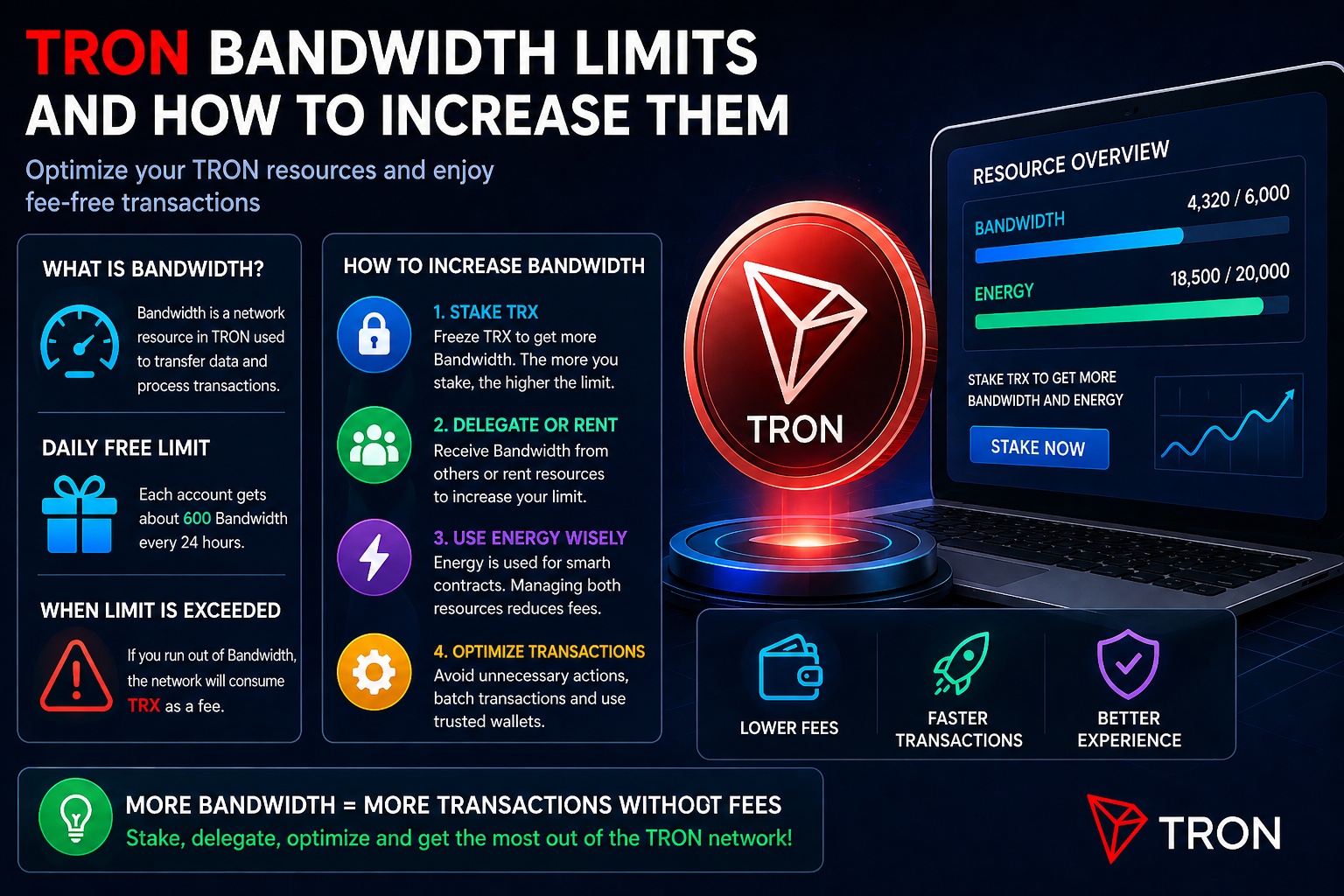
The TRON network is known for its low fees and high transaction speed. However, users often encounter the concept of Bandwidth — a key resource that determines whether transactions can be sent without paying fees.
Let’s break down what it is, what limits exist, and how to effectively increase it.
What Is Bandwidth in TRON
Bandwidth is a network resource in TRON used to transfer data on the blockchain. Each transaction requires a certain number of bandwidth points.
Key features: Every account receives a free daily limit (about 600 bandwidth) It is consumed when sending transactions If the limit is exceeded, a fee is charged in TRX
It’s important to understand: Bandwidth is not money — it is a network resource, similar to “traffic.”
How Bandwidth Is Consumed
The amount of bandwidth used depends on:
transaction size type of operation (a simple TRX transfer is cheaper than interacting with smart contracts) amount of data in the transaction Example: a simple TRX transaction ≈ 200–300 bandwidth more complex operations may require more Main Bandwidth Limits
In the TRON network, the following limits apply:
The free limit is refreshed every 24 hours The maximum amount depends on TRX staking If bandwidth runs out, a fee is charged
Without optimization, users are limited to a small number of free transactions per day.
How to Increase Bandwidth in TRON 1. TRX Staking (Freezing Funds)
The most effective way is to freeze TRX.
When staking:
you receive additional bandwidth your funds remain yours (they can be unfrozen later)
The more TRX you stake, the higher your limit.
2. Resource Delegation
In TRON, you can:
receive bandwidth from other users rent resources
This is especially useful for:
dApp developers active users 3. Using the Second Resource — Energy
TRON also has another resource called Energy.
Bandwidth is used for data transfer Energy is used for smart contract execution
Optimizing both resources can reduce fees to nearly zero.
4. Transaction Optimization
To save bandwidth:
avoid unnecessary operations batch transactions use reliable wallets
Popular wallets:
TronLink Trust Wallet Practical Optimization Tips Keep part of your TRX staked at all times Monitor bandwidth usage in your wallet Use delegation for large-scale operations Plan transactions in advance Why Increasing Bandwidth Matters
Without sufficient limits:
you pay fees transactions may be delayed dApp efficiency decreases
With increased bandwidth:
transactions become free speed improves user experience is enhanced Conclusion
Bandwidth in TRON is a fundamental resource that directly affects transaction cost and speed. Understanding how it works and managing it properly allows you to almost completely eliminate fees.
Use staking, delegation, and optimization strategies to get the most out of the TRON network.