TRON Fees With Energy: Hidden Costs & Trust Wallet Risks Explained
A detailed breakdown of why fees are charged on the Tron network even when you have energy, along with an analysis of the risks of energy rental and potential overpayments in crypto wallets.
Why Does Tron Charge a Fee Even If You Have Energy — The Truth About Hidden Costs and Trust Wallet Risks
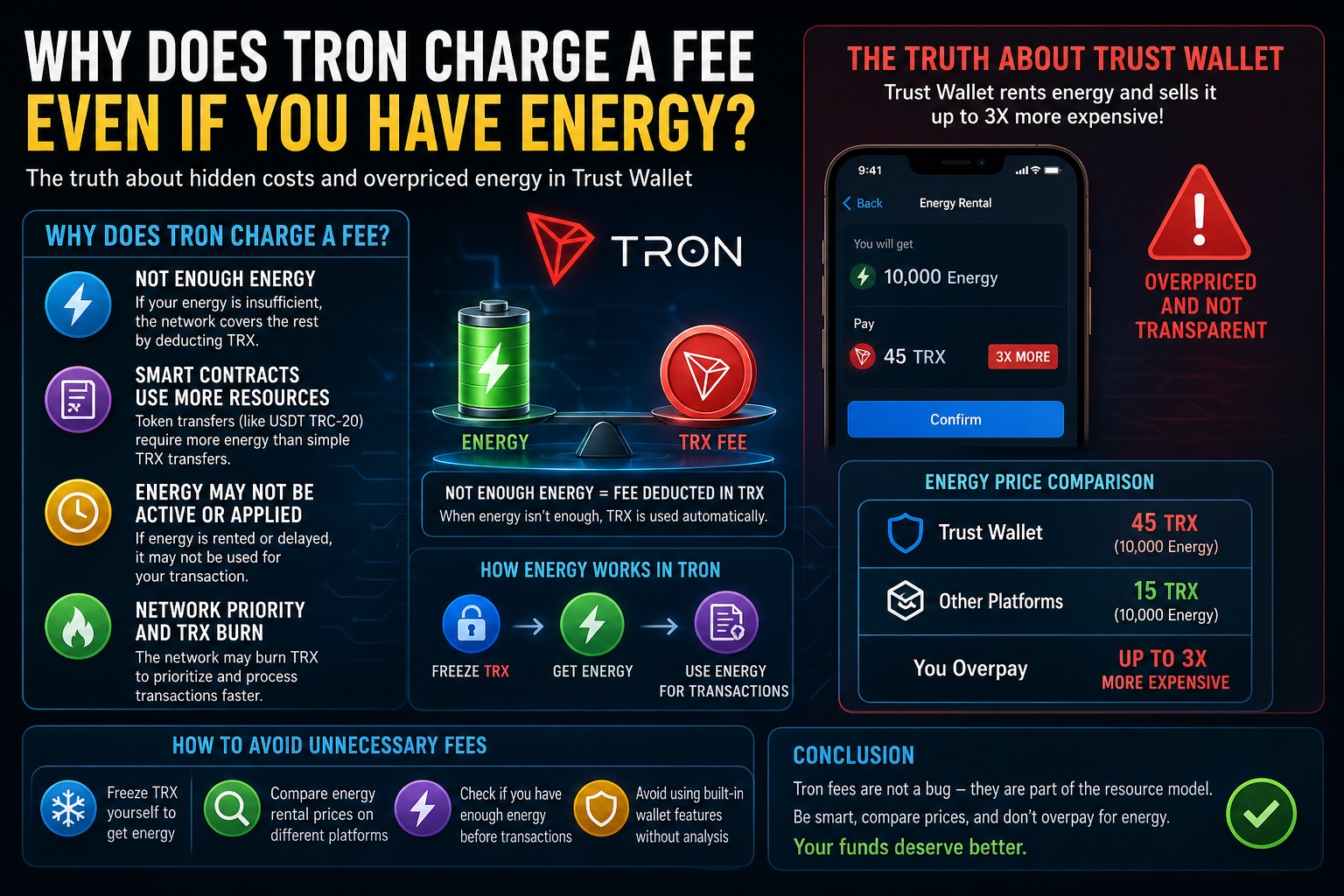
Why Are There Fees on the Tron Network Even If You Have Energy
The Tron network is positioned as one of the cheapest blockchain platforms, where transactions can be nearly free thanks to resource usage — Bandwidth and Energy. However, many users encounter an unexpected issue: even when they have energy, a fee in TRX is still deducted.
Let’s break down why this happens.
1. You May Not Have Enough Energy
Every operation on the Tron network requires a certain amount of energy. If a user doesn’t have enough, the system automatically covers the deficit by deducting TRX as a fee.
2. Smart Contracts Consume More Resources
Regular TRX transfers require minimal resources, but token transactions (such as USDT TRC-20) use smart contracts. These are significantly more “expensive” in terms of energy, so even if you have some energy, it may not be sufficient.
3. Energy Is Not Always Active or Properly Applied
If energy was obtained through third-party services or rentals, there may be delays, errors, or limitations that prevent it from being applied to a transaction.
4. Network Priority and TRX Burn
In some cases, the network may automatically deduct TRX to prioritize and speed up transaction processing, especially during periods of high load.
Energy Rental in Tron: How It Works
To avoid fees, users can:
Freeze TRX to receive energy Or rent energy through third-party services
Energy rental has become popular because it can reduce costs—but this is also where controversial aspects begin to appear.
Risks of Using Built-In Wallet Services
Some crypto wallets offer a built-in energy rental feature. While convenient, it’s important to understand:
Users don’t always see the real market price of energy Costs may differ significantly from external services There is often a lack of transparency in pricing
In particular, users frequently report that renting energy through wallet interfaces can cost several times more than on specialized platforms.
Concerns About Pricing in Trust Wallet
There are ongoing discussions among users regarding how built-in features in Trust Wallet operate:
Energy rental may be offered at prices above market rates Users are not always informed about cheaper alternatives The interface lacks transparent price comparison
It’s important to note: such situations do not necessarily indicate fraud, but they may point to a non-transparent business model or partner integrations within the wallet.
Why This Matters for Users
If you actively use Tron, overpaying for energy can lead to significant losses:
Frequent transactions = accumulating unnecessary costs Using built-in features without analysis = 2–3× overpayment Lack of control = reduced efficiency of your funds How to Avoid Unnecessary Fees
Here are some practical tips:
Freeze TRX yourself to obtain energy Compare energy rental prices across different platforms Check if you have enough energy before making a transaction Avoid using built-in wallet features without reviewing the terms Conclusion
Fees on the Tron network are not a bug—they are part of its resource-based model. Even if you have energy, you may still pay in TRX if the resource is insufficient or used inefficiently.
Energy rental is a useful tool, but it requires careful attention. Using built-in services, including those offered in popular wallets, should always involve checking the conditions and comparing prices.