AML Check for TRON Wallets: Avoid USDT TRC20 Risks & Freezing
A comprehensive guide to AML checks for TRON wallets (USDT TRC-20). Learn about the risks of receiving funds from exchanges and exchangers, and ways to protect your assets.
AML Check for TRON Wallets (USDT TRC-20) — How to Verify and Avoid Risks
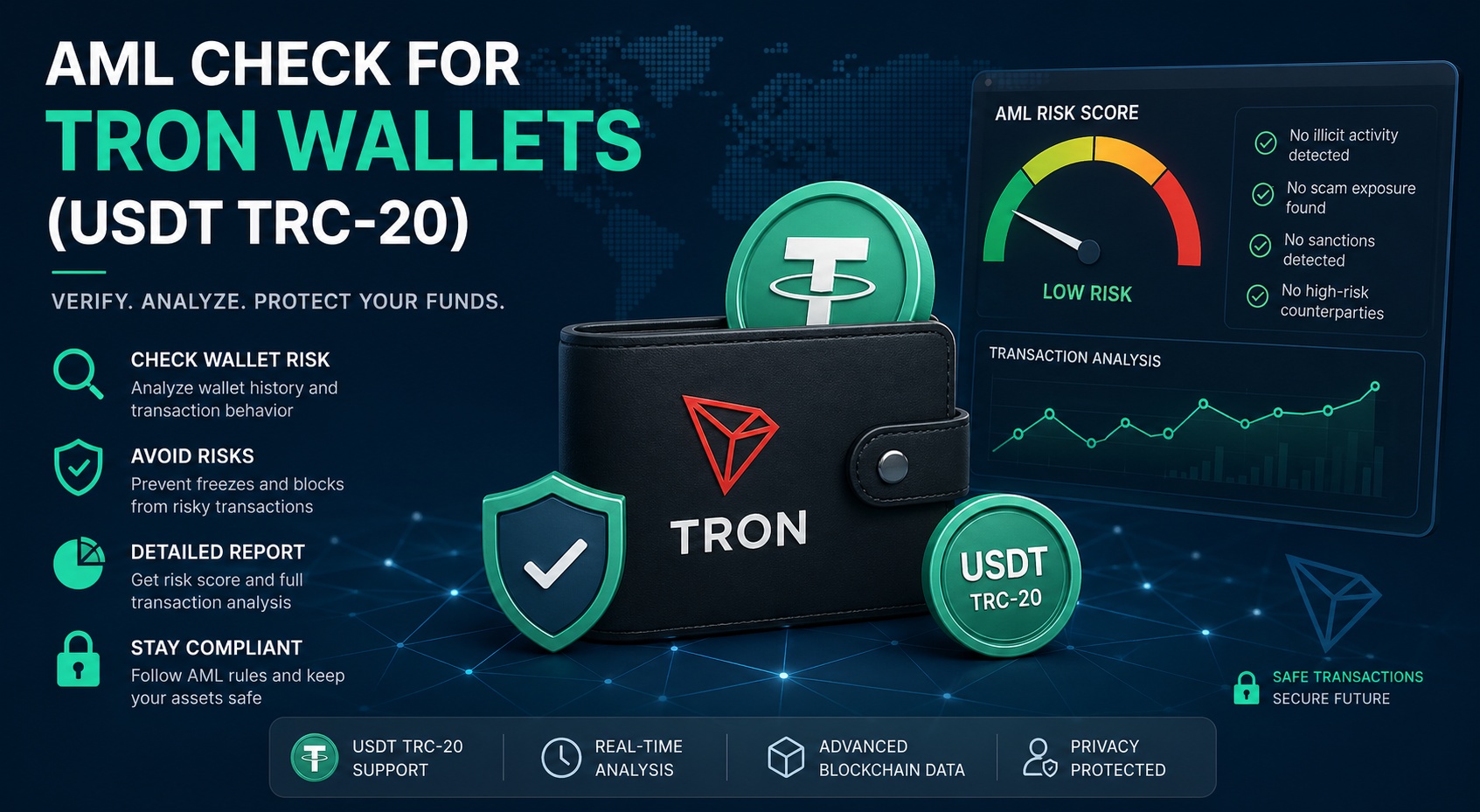
With the growing popularity of the TRON network and the USDT TRC-20 stablecoin, more and more users are facing the need to check cryptocurrency wallets for “cleanliness.” AML (Anti-Money Laundering) checks help identify risks associated with illegal sources of funds and prevent asset freezing.
In this article, we will explain how AML checks for TRON wallets work, what risks arise when receiving transfers from exchanges and exchangers, and how to protect your funds.
What is an AML Check for TRON Wallets
An AML check is the analysis of a crypto wallet’s transaction history to identify connections with:
darknet marketplaces fraudulent schemes sanctioned addresses illegal services
For the TRON (TRC-20) network, such checks are especially relevant, as USDT is активно used in P2P exchanges and international transfers.
How AML Checks for TRC-20 Wallets Work
Specialized services analyze:
incoming and outgoing transactions sources of funds transaction chains (transaction tracing) address risk level (risk score)
Based on the results, a wallet receives a rating:
Low Risk — clean funds Medium Risk — possible suspicious connections High Risk — high probability of blocking Risks of Receiving USDT TRC-20 from Exchanges and Exchangers 1. “Tainted” Funds from Other Users
When working with P2P platforms or exchangers, you may receive USDT that was previously involved in illegal activities.
2. Asset Freezing
Some centralized exchanges may:
block deposits request KYC/documents freeze accounts 3. Loss of Wallet Reputation
If a wallet receives “tainted” funds, its risk profile deteriorates, which affects future transactions.
4. Service-Level Checks
Exchangers and platforms may refuse service if the AML risk is too high.
Why TRON (TRC-20) Is Especially Exposed to AML Risks low fees → popular for массовые transfers high transaction speed active use in P2P large number of grey-market exchangers How to Check a TRON Wallet for AML
Before receiving or sending funds, it is recommended to:
check the address using an AML service evaluate the risk score review transaction history verify counterparties How to Reduce Risks use trusted exchanges avoid suspicious exchangers do not accept funds from unknown sources regularly check your wallet separate wallets for different purposes Conclusion
AML checks for TRON wallets (USDT TRC-20) are an essential tool for safe cryptocurrency usage. Ignoring such analysis can lead to asset freezing, financial losses, and issues with exchanges.
Regular monitoring and careful handling of transactions will help you preserve your assets and maintain your wallet’s reputation.