Price per unit of TRX energy
Comprehensive guide to TRX energy pricing, influencing factors, staking, and ways to reduce USDT TRC-20 fees using energy rental.
Price per Unit of TRX Energy: How It’s Formed and How to Save on Fees
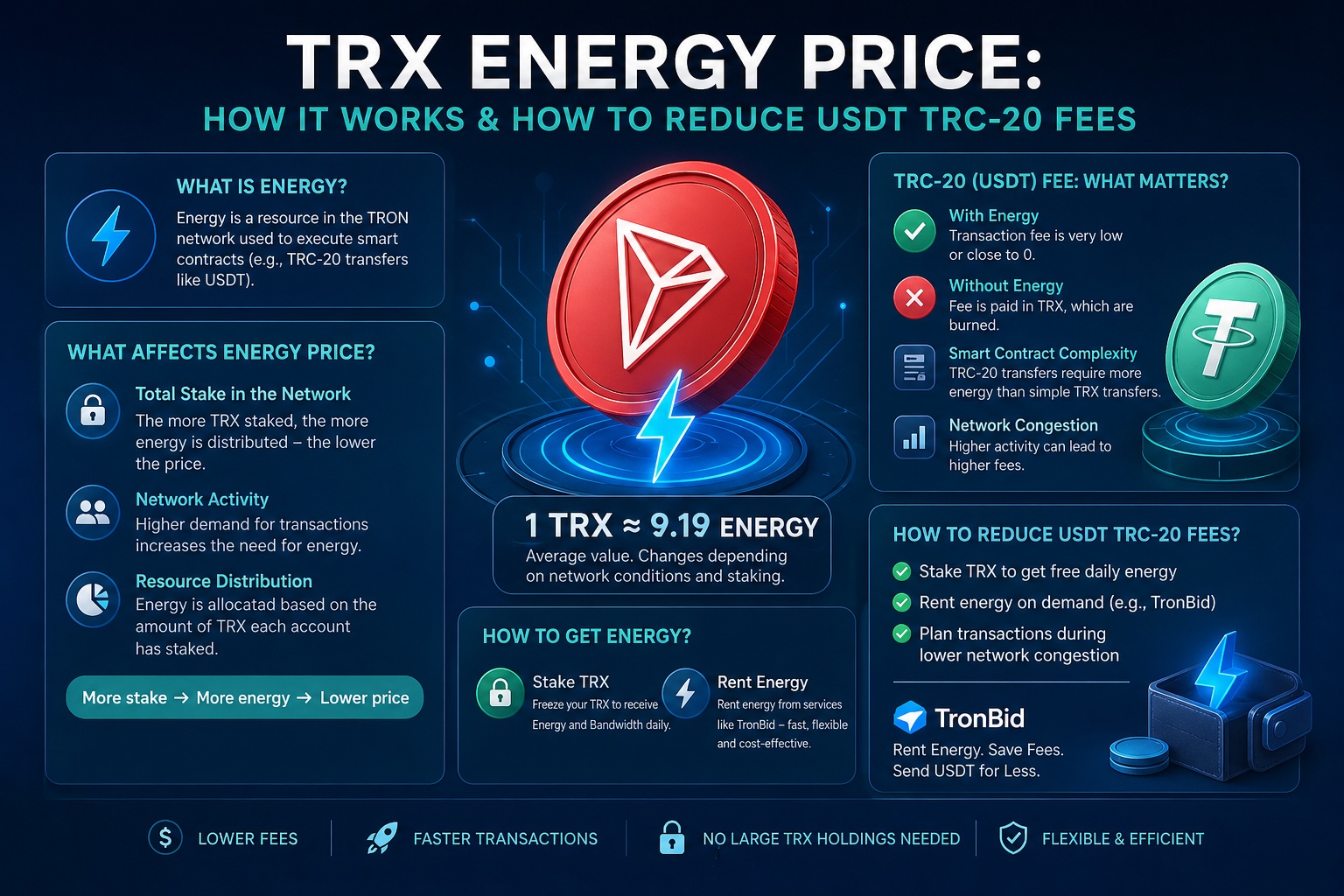
In the TRON (TRX) ecosystem, energy is a key resource that directly affects transaction costs, especially when working with USDT on the TRC-20 network. Understanding how much energy costs and how to obtain it more cheaply can significantly reduce fees.
Current TRX Energy Price
At the moment, the average rate is approximately:
1 TRX ≈ 9.19 energy
This value is not fixed — it changes dynamically depending on network conditions and user activity.
What Affects the Price of TRX Energy
The price per unit of energy in the TRON network is influenced by several factors:
1. Staking Volume
The more TRX is frozen (staked), the more energy is distributed among network participants. 👉 This means:
more staking → more energy → lower price less staking → energy shortage → higher price 2. Network Load
When the number of transactions increases (for example, mass USDT transfers), demand for energy rises.
3. Resource Distribution Mechanism
In TRON, energy is distributed proportionally to the amount of TRX staked:
more TRX staked → more daily energy less TRX → fewer resources → higher reliance on fees How TRX Staking and Energy Work
Staking in the TRON network is the process of freezing TRX to receive resources:
Energy — used for smart contracts (e.g., TRC-20 transactions) Bandwidth — used for regular transactions Key features: energy is generated daily distributed proportionally to stake unused energy is burned (resets daily) USDT TRC-20 Fees: What They Depend On
The fee for sending USDT on the TRON network can range from near zero to several dollars.
Main factors: 1. Energy Availability
If you have energy:
the fee is minimal or zero
If you don’t:
the fee is paid in TRX (burned) 2. Smart Contract Complexity
TRC-20 transfers require code execution → higher energy consumption than simple TRX transfers.
3. Network Congestion
During periods of high activity, fees may increase.
How to Reduce TRC-20 Fees 1. Staking TRX
By freezing TRX, you receive free energy. However:
it requires capital efficiency depends on transaction volume 2. Renting Energy via Services
One of the most effective methods is renting energy through services like TronBid.
Advantages of energy rental: no need to hold large amounts of TRX cheaper than paying fees directly instant access to energy How it works: You rent energy for the required number of transactions It is credited to your wallet You perform USDT transfers with little to no fees
👉 As a result, the cost per transaction can be reduced significantly.
When Energy Rental Is выгодно
Energy rental is especially beneficial if:
you frequently send USDT you work with exchanges or P2P platforms you don’t want to lock large amounts of TRX Conclusion
The price per unit of TRX energy is a dynamic metric influenced by staking and network load. With the current average of about 9.19 energy per 1 TRX, users can optimize costs by using:
TRX staking energy rental services like TronBid
This is particularly important for reducing fees when working with USDT TRC-20.
If renting is the right option for this transfer, open the TRON Energy rental form to review the live price before payment.