TRON Energy vs Bandwidth: Differences & How They Work Together
How do Energy and Bandwidth differ in TRON?
Article: TRON Energy and Bandwidth — What’s the Difference
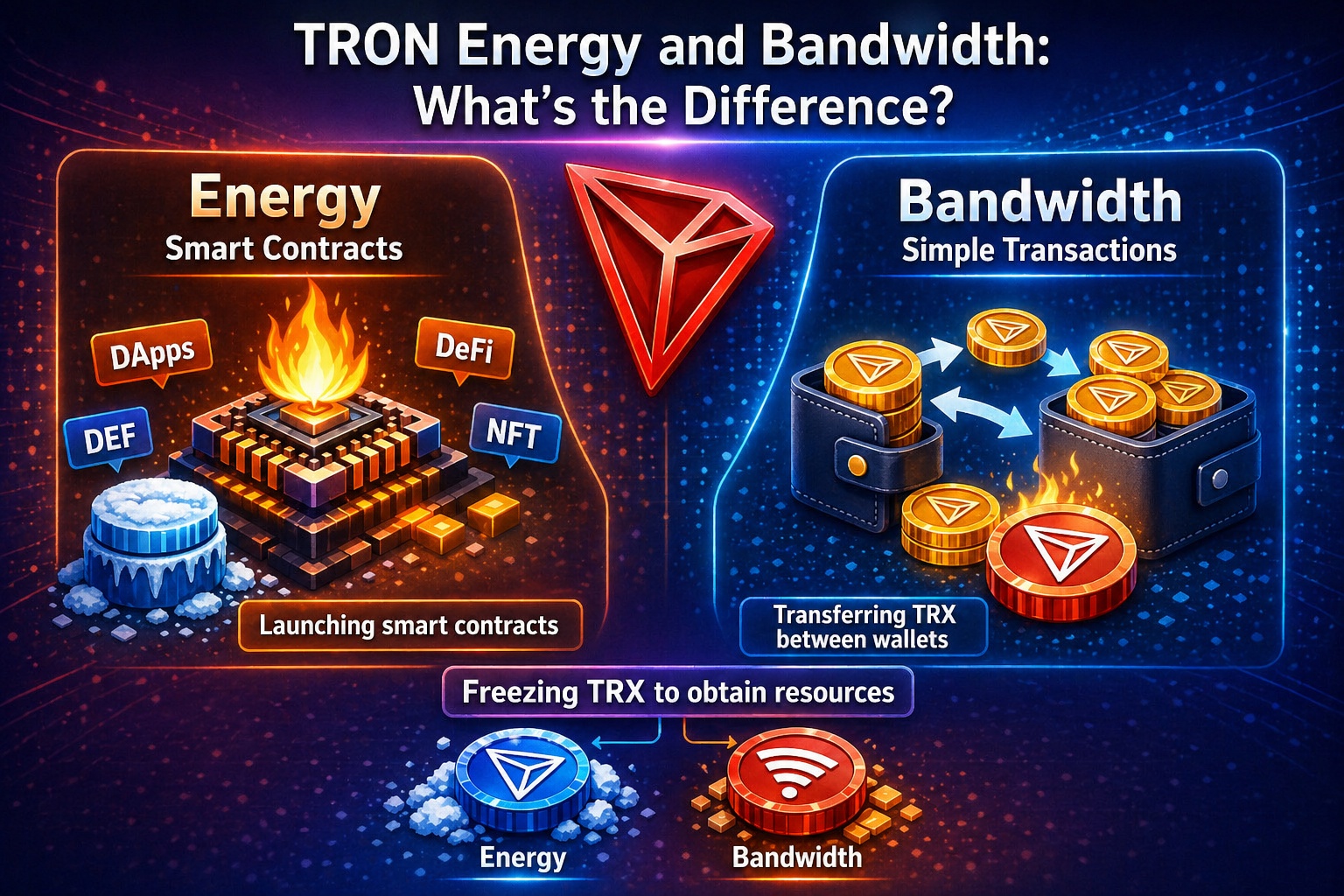
The TRON network is one of the popular blockchain platforms for decentralized applications (dApps) and smart contracts. One of TRON’s key features is its resource system, which includes Energy and Bandwidth. These two parameters are often confused, although they serve different purposes.
Let’s take a closer look at how TRON Energy differs from Bandwidth and how they are used.
What is Bandwidth in TRON
Bandwidth is a resource used for performing simple transactions on the TRON network.
Main functions of Bandwidth: Sending TRX between wallets Paying for basic transactions Handling simple operations without smart contracts
Every TRON user receives a small amount of free Bandwidth daily. If it is not enough, users can:
burn TRX to obtain additional Bandwidth or freeze TRX What is Energy in TRON
Energy is a resource required to execute smart contracts on the TRON network.
Main functions of Energy: Running operations in dApps Interacting with smart contracts Processing complex transactions (DeFi, NFTs, games)
Energy is not provided in large free amounts — it is usually obtained by freezing TRX.
Key Differences Between Energy and Bandwidth in TRON Parameter Bandwidth Energy Purpose Simple transactions Smart contracts Type of operations TRX transfers dApps, DeFi, NFTs Free limit Available daily Almost none How to obtain Free + freezing TRX Only freezing TRX Fees Small fees Depends on contract complexity How to Get Energy and Bandwidth
Both resources can be obtained through the TRX freezing mechanism:
1. Freeze TRX
Users lock their TRX for a certain period and receive:
Bandwidth (for transactions) Energy (for smart contracts) 2. Alternative methods Burning TRX (less efficient) Using third-party services (rare) Why It’s Important to Understand the Difference
If you don’t distinguish between Energy and Bandwidth, you may face:
transaction errors additional fees inability to execute smart contracts
For example:
sending TRX → requires Bandwidth running DeFi farming → requires Energy Conclusion
Bandwidth in TRON is responsible for basic transfers, while Energy is used for smart contract operations. Both resources can be obtained by freezing TRX, but they are used in different scenarios.
Understanding this difference helps reduce fees and make better use of the TRON ecosystem.
When you are ready to make the transfer, check the live TRON Energy rental options for the sending wallet.