Tron vs Solana: Resources, Fees and Capabilities Comparison 2026
A detailed comparison of Tron and Solana: fees, resources, speed, and capabilities. Learn how energy works in Tron and how to save on transactions through energy rental.
Tron vs Solana: Resource Comparison and Blockchain Efficiency
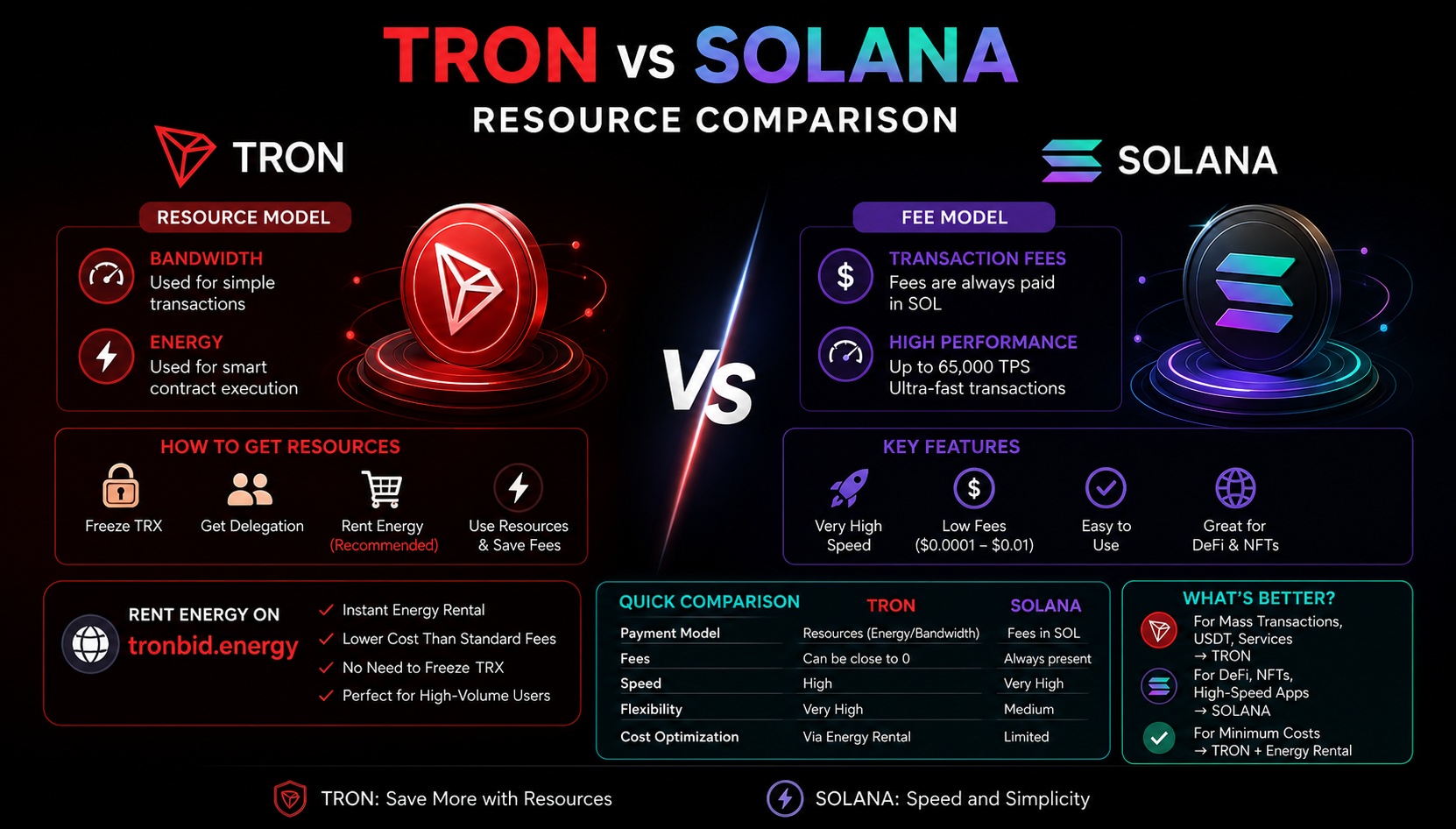
In the world of cryptocurrencies, the choice of blockchain directly affects transaction speed, fees, and overall usability. Two popular solutions — Tron and Solana — offer different approaches to resource management. In this article, we’ll explore their differences, which option is more cost-effective, and where each blockchain is best used.
Key Differences Between Tron and Solana Tron: Resource Model (Energy and Bandwidth)
The Tron network uses a unique resource system:
Bandwidth — used for simple transactions Energy — consumed when executing smart contracts (e.g., USDT TRC-20 transfers)
The main advantage is the ability to avoid paying direct fees if you have sufficient resources.
How to get resources: Freeze TRX Receive delegation Rent resources (the fastest option)
👉 Energy rental has become a popular solution for users who perform frequent transactions.
Energy Rental in Tron
Rental services can significantly reduce costs. For example, the platform tronbid.energy offers:
instant Energy rental lower costs compared to standard fees no need to freeze TRX a convenient interface for quick access to resources
This is especially useful for:
arbitrage traders crypto traders services with high transaction volumes Solana: Fee Model
Unlike Tron, Solana uses a traditional model:
fixed fees in SOL high throughput (up to 65,000 TPS) no separation into resources (like Energy/Bandwidth) Advantages of Solana: ease of use fast transactions low fees (on average $0.0001–0.01) Disadvantages: fees are always required no way to optimize costs via resources dependency on network load Tron vs Solana Comparison Parameter Tron Solana Payment Model Resources (Energy/Bandwidth) Fees in SOL Fees Can be reduced to 0 Always required Speed High Very high Flexibility Very high Moderate Cost Optimization Via energy rental Limited Which Is More Cost-Effective? For high-volume transactions (USDT, services) → Tron is more efficient For DeFi and NFTs → Solana is often preferred For minimizing costs → Tron + energy rental (e.g., via tronbid.energy) Conclusion
Tron stands out due to its flexible resource system and the ability to reduce fees to near zero. Solana, on the other hand, focuses on speed and simplicity. The best choice depends on your goals, but if your priority is cost savings and control over expenses, Tron appears to be the more practical solution.