USDT Gift Card Review: A More Personal Way to Send Crypto
A wallet transfer moves money. A gift should also feel like a gift. We examine how BuyUSDTGiftCard bridges that gap, what the buyer pays, and what the recipient needs to know.
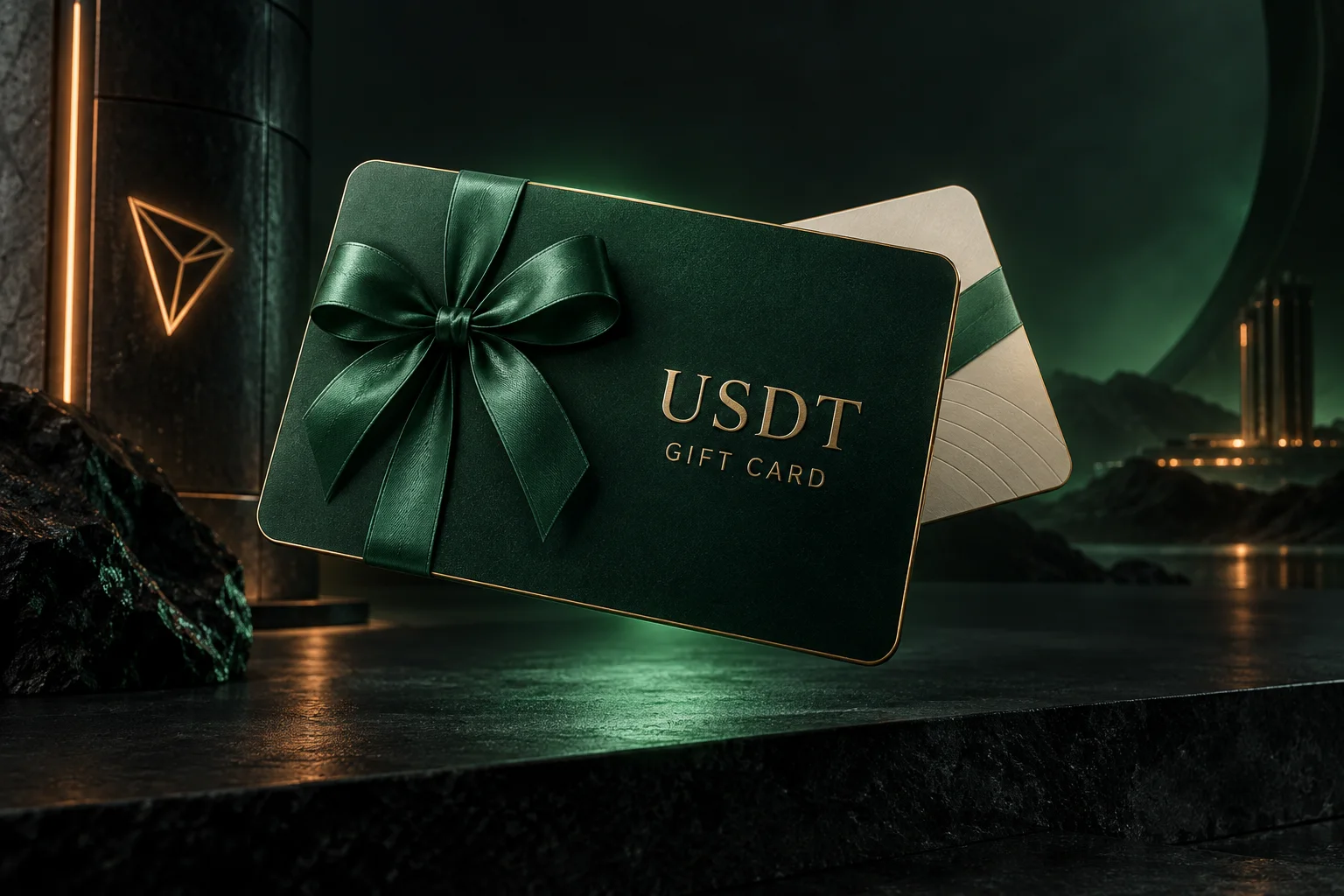
Why give a USDT gift card instead of making a transfer?
Picture a birthday gift for a friend who uses crypto. A direct transfer is practical, but first you need their receiving address, the right network and a reason to ask without spoiling the surprise. Afterwards, the gift looks much like any other wallet transaction. A card changes that sequence: choose the value, add a name, send the design, and let the recipient choose a TRON destination when they redeem it.
That is the useful idea behind BuyUSDTGiftCard. It packages a USDT entitlement into a shareable digital gift. The attraction is not a new token or a promise of returns. It is the presentation and the handover: the buyer can arrange the gift before knowing the recipient's wallet address.
What you actually buy
A card carries a face value in USDT, artwork, an optional recipient name and a private redemption code with a QR link. After the purchase payment is accepted, the card is available through the private order page and sent to the buyer's email. The buyer can download an image and share the gift privately. At redemption, the service pays its full face value as USDT TRC-20 on TRON.
- Available amounts: according to the website's terms, cards are available for 10 to 5,000 USDT. Check the purchase form for the amount you want.
- Payment assets: USDT TRC-20 or TRX on the TRON network, chosen when the order is created.
- Delivery: an issued card, redemption code and QR link by email, with access through the private order page.
- Redemption: the full card value in one payout; there is no partial balance to spend over several redemptions.
- Expiry: issued cards have no stated expiry. This is different from the payment deadline on a purchase invoice.
- Languages: the service offers English, Russian and Simplified Chinese versions. No recipient account is required.
Until the card is redeemed, the service still owes the recipient a USDT payout. The tokens have not yet reached the recipient's own wallet. The service must remain able to make that payment. Having no expiry date is convenient, but the unused card still depends on the operator.
The design is part of the product
The public purchase page shows ten named designs: Emerald, Obsidian, Pearl, Botanica, Mint, Champagne, Ocean, Aurora, Sunset and Celebration. The preview changes with the selected presentation and gift value. An optional name makes the card feel intended for someone, rather than an anonymous amount forwarded in a chat.
This is where the service earns its place. A birthday, a thank-you or a remote celebration has a different emotional purpose from settling an invoice. Giving a designed card gives the sender something to present and the recipient something to open. However, personalisation is decorative: the name does not prevent another person with the code from redeeming the gift.
Fees explained: face value is not the invoice total
The recipient's gift value and the buyer's purchase cost are separate. At the time of our review, the public form displayed a 100 USDT card with a 1 USDT service fee and a 101 USDT subtotal. It also stated that a small identification amount is added to the invoice. This is an observed example, not a fixed quote or proof that every denomination uses the same fee.
- 1Gift value: 100 USDT in this example. This is the value the recipient is entitled to redeem.
- 2Purchase fee: 1 USDT in the reviewed example. Check the live quote for your own amount.
- 3Exact invoice amount: use the complete amount shown at checkout, including the identification decimals.
- 4Your wallet or exchange cost: the sending provider may charge separately. The amount that arrives must still match the invoice.
If you select TRX, the order fixes a conversion rate and the TRX amount to pay. The card remains denominated in USDT. Sending TRX to an invoice created for USDT does not substitute for selecting TRX in the purchase form. Always use the amount stated on the current invoice. Do not reuse an amount from an older payment or an article.
The service states that it does not deduct a redemption fee from the face value. That does not mean every transaction surrounding the gift is free. The buyer's payment can have a network cost, and moving the received USDT later is a new transaction. Our our guide to USDT TRC-20 transfer costs explains that separate part of the cost.
How to buy and send the gift
- 1Choose a value and design. Add the recipient's name if you wish, and enter an email address you control for delivery.
- 2Choose USDT TRC-20 or TRX. Review the face value, purchase fee and total before opening the invoice.
- 3Copy the invoice's address and full amount. Check the asset and TRON network on your wallet's final approval screen.
- 4Pay within the displayed deadline. The terms describe a normal 30-minute window; confirmation must meet the invoice conditions, not merely be initiated before expiry.
- 5Wait for the payment to be matched and the card issued. Use the private order page if the delivery email is delayed.
- 6Share the card or its redemption link privately with the intended recipient. Keep the protected order link to yourself.
Small practical details matter here. Do not round away the final decimal places, combine several orders into one transfer, or automatically send another payment if the first one is still being processed. For a wrong amount, wrong asset or late payment, keep the invoice reference and transaction ID and contact support. The service's the buying and redemption guide is the place to check the current screens and handling rules before purchase.
How the recipient redeems a USDT gift card
The recipient opens the private gift link, scans the QR or enters the code on the redemption page. After checking the card value, they supply a TRON address that supports USDT TRC-20, review the complete address and confirm. No seed phrase or wallet private key is needed for this process.
Receiving at an exchange requires an extra check: that exchange must support USDT deposits on TRON, and its minimum deposit and account rules still apply. An address passing a format check does not establish ownership or ensure an exchange will credit the payment. Compare the full destination with the wallet, including the middle characters.
The payout page distinguishes processing from a transaction being sent. A submitted transaction and a credited exchange balance are not the same event. Use the transaction link to follow the on-chain record, and avoid repeatedly trying to redeem while a payout is already underway. One gift creates one entitlement, not several attempts at a separate payout.

Where TronBid Energy fits into the gift
TronBid Energy supplies TRON Energy to this project. This is the infrastructure connection behind our interest in the service. When a gift is redeemed, its USDT payout is a smart-contract transaction on TRON. The gift-card service arranges the sending resources; the recipient does not have to send TRX to the service to unlock the card.
Energy supports contract execution, while Bandwidth accounts for transaction data. Arranging Energy helps the service handle the payout's resource requirements. It does not eliminate all network costs, guarantee a settlement time or insure the card value. The gift-card operator remains responsible for card issuance, customer support and payout fulfilment.
This distinction makes the user experience easier to understand: the recipient receives the gift's USDT value, while the service handles its own outgoing transaction. If the recipient later sends those tokens somewhere else, their wallet starts a separate transaction with its own resource requirements. See how USDT transfers without TRX work and the TRON Energy calculator for that later step.
For software developers, this is a practical use of TRON Energy in an application. The website guides the recipient through a simple redemption process while the backend prepares transaction resources. Projects planning similar integrations can consult the TRON Energy API documentation; individuals making their own transfers can rent TRON Energy.
Gift card or direct transfer: which suits the occasion?
- Choose a card when you want a personalised digital gift and do not yet know the recipient's TRON wallet address.
- Choose a card when the recipient should decide the destination later and the presentation matters to the occasion.
- Consider a direct transfer when both parties already know the correct network and address and the purpose is simply to move USDT.
- Consider a different gift when the recipient does not want crypto or cannot receive USDT TRC-20. A card does not convert itself into bank money.
A direct transfer avoids the separate card purchase fee and the period during which an unused card depends on the service. In return, it needs the destination at the start and offers less of a gift-giving experience. Neither format wins every situation. The sensible comparison is what you want the gift to accomplish.
What we would check before buying
Protect the code as carefully as the value
The card is a bearer instrument: whoever has the secret can request redemption. A photo showing the code, a forwarded private link or a public QR image can expose the gift. The printed name is not an identity check. Send it through a private channel and protect the delivery mailbox.
Read the policy before assuming a refund
Under the published refund policy, changing your mind is not normally a reason to refund an issued card; mandatory consumer rights still apply. You can cancel an unpaid order when its payment status permits cancellation. This does not reverse a blockchain transfer you have already sent. Incorrect, duplicate or late transfers require individual review. Keep the order reference and TXID for support; do not publish the secret gift code.
Understand the service dependency
The public risk disclosure acknowledges liquidity, operational-wallet, provider and network risks. An unused card depends on the operator's ability to deliver its USDT payout. The service is independent of Tether and does not claim Tether endorsement. Its face value is in USDT, not a guaranteed bank-currency amount.
What could make the experience stronger
The core journey is easy to follow. Our main editorial wish is equally clear fee visibility at every step: show the final identification amount before the wallet approval, explain late-payment handling beside the countdown, and keep support and payout status easy to reach. Public operating history and independently verifiable reliability information would also help readers assess trust beyond an attractive interface. We have not independently measured uptime or completed a purchase for this review.
Our verdict: a useful service with a clear purpose
BuyUSDTGiftCard addresses a real gap between sending crypto and giving a gift. The personalised presentation, private delivery and recipient-selected destination make USDT gifting more thoughtful. Handling payout resources on the service side also removes a confusing step for the recipient. That is a useful product, not merely a different label for a wallet transfer.
We consider this service much needed for this specific gifting use case. Its strengths are most convincing when paired with an informed buyer: check the full price, use TRON, protect the code and understand the operator's role until redemption. TronBid Energy contributes the Energy supply behind the project, and we see practical value in infrastructure that supports this kind of everyday use.
If that matches the occasion you have in mind, you can create a personalised USDT gift card. Review the current amount and terms at checkout, then let the recipient decide where their USDT gift should arrive.