TRC20 vs ERC20 Fees: Tron Energy & Ethereum Gas Comparison
Comparison of the cost of USDT transfers on the TRON and Ethereum networks.
TRC20 or ERC20: a comparison of fees and which is more cost-effective in 2026
Introduction
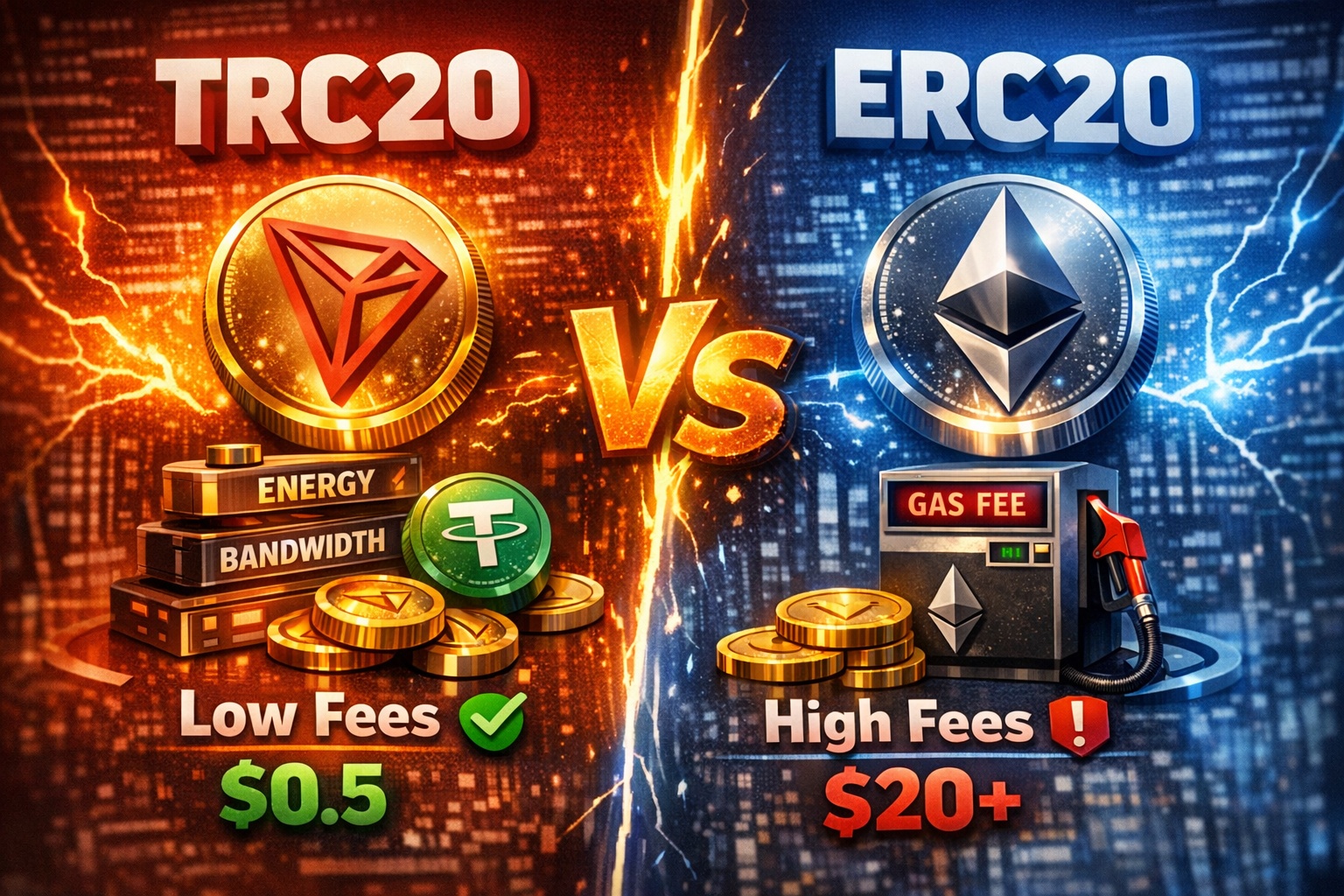
When transferring cryptocurrency, users most often face a choice between two networks: TRC20 (Tron) or ERC20 (Ethereum). The main factor influencing this decision is transaction fees. The difference between these networks can be tens of times, especially when making frequent USDT transfers.
In this article, we will cover:
why TRC20 is cheaper than ERC20 how energy and bandwidth work in Tron what energy rental is what fees ERC20 has and why they are so high which option is more cost-effective in 2026 What are TRC20 and ERC20
TRC20 is a token standard on the Tron network. It is used to create and transfer tokens, including USDT (USDT TRC20).
ERC20 is a token standard on the Ethereum network. It is the most widely used standard in the crypto industry.
The main difference lies in network architecture and transaction execution costs.
TRC20 fees: how Tron works
The Tron network uses a unique resource model:
1. Energy
Energy is a computational resource consumed when executing smart contracts (for example, transferring USDT TRC20).
2. Bandwidth
Bandwidth is a resource used for regular transactions (for example, simple TRX transfers or basic operations).
How to get energy in Tron
There are two ways:
1. TRX staking (freezing)
You can freeze TRX tokens and receive:
Energy Bandwidth voting power in the network
Downside: funds are locked for a period of time.
2. Energy rental
A popular method among users is renting Tron energy.
How it works:
the user pays a small amount in TRX receives energy for a certain period of time makes USDT TRC20 transfers with almost zero fees
💡 In many cases, energy rental is cheaper than paying a transaction fee in other networks.
ERC20 fees: why they are so expensive
In the Ethereum network, the transaction fee is called a Gas Fee.
It depends on:
network congestion smart contract complexity gas price (Gwei) How the fee is formed: each operation requires gas gas is paid in ETH final cost can vary significantly
During high network activity, fees can reach:
$5–$20 sometimes $30+ per transaction TRC20 vs ERC20: fee comparison Parameter TRC20 (Tron) ERC20 (Ethereum) Average fee ~$0 – $1 $5 – $30+ Speed 3–5 seconds 15 sec – 5 min Network load low high Suitable for USDT yes (very popular) yes (but expensive) Why TRC20 is cheaper
Main reasons:
high throughput of the Tron network Energy/Bandwidth model instead of gas centrally optimized architecture resource subsidies through staking When ERC20 is more suitable
Despite high fees, ERC20 is used when:
maximum decentralization is required working with Ethereum DeFi projects using advanced smart contracts integrating with major crypto protocols When to use TRC20
TRC20 is ideal for:
USDT transfers between exchanges P2P payments regular transactions minimizing fees Conclusion
If the main goal is saving on fees, TRC20 is the clear winner due to its Energy and Bandwidth system, as well as the ability to rent energy.
ERC20 remains the standard for DeFi and complex applications, but it comes with significantly higher transaction costs.